From Intern to Outreach Specialist: Morgan’s ETC Journey

At ETC, internships provide opportunities to explore new interests, gain hands-on experience, make connections, and build meaningful careers.

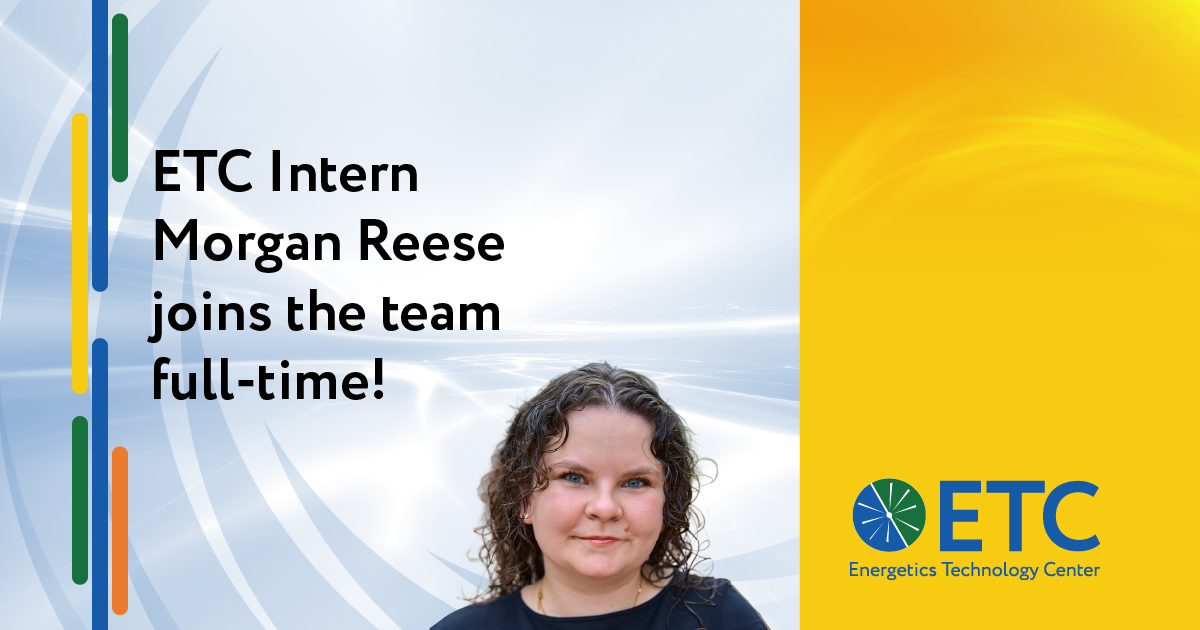
Morgan Reese, a recent graduate of Franklin & Marshall College, originally joined ETC as an intern supporting STEM education initiatives. Although she had always been interested in teaching, she never expected to find her passion in STEM.

“As an English major, ETC and its STEM initiatives did not originally feel like something I would be interested in or even very good at,” Morgan said. “But ETC gave me an opportunity to try teaching and figure out what I want to do professionally. As it turns out, I truly enjoy teaching; and more than that, I love teaching STEM.”

One of her favorite internship experiences was helping prepare ETC’s Energy Science Summer Camp, where students explore different forms of energy through hands-on activities and experiments.

“I really enjoyed testing the experiments before camps started,” Morgan said. “It was like all of the interns were in our own summer camp, building s’more solar ovens and paper windmills.”

Today, Morgan is a full-time member of the ETC team, serving as an Outreach Specialist. In her new role, she is excited to develop curriculum and create experiences that show students the creative side of STEM

“I hope to make STEM more interesting and accessible to students,” she said. “I want to reach students who may not have seen STEM as something fun and full of creativity and imagination.”

Morgan credits ETC’s internship program with helping her grow professionally and discover a career path she had not previously considered.

“The internship gave me an opportunity to expand my own knowledge of STEM and my educational experience,” she said. “I appreciate how supportive everyone at ETC is. They welcome questions and ideas which means I have constant opportunities to improve and to innovate.”

Alongside Morgan’s transition to a full-time role, ETC has also welcomed three new interns. We are excited about the continued growth of the internship program and look forward to the impact Morgan will continue to make through ETC’s STEM education programs.

Interested in an Internship at ETC? Learn more: https://www.etcmd.com/internships/.

ETC Interns Contribute to DEVCOM ARL Research Publication on Synthetic Material Modeling

Energetics Technology Center (ETC) interns recently contributed to a research publication in collaboration with the U.S. Army Combat Capabilities Development Command, known as DEVCOM, Army Research Laboratory, supporting efforts to advance synthetic material modeling and improve understanding of electromagnetic exposure impacts on Soldiers.

The publication focuses on the development of an automated modeling routine that introduces porosity, an interconnected network of holes or channels, into 3D objects using Blender, a software platform for 3D modeling and simulation. The approach enabled researchers to modify the density and material properties of objects for a range of scientific and engineering applications.

At DEVCOM ARL, the routine is being used to create porous synthetic bone materials capable of absorbing specialized gels to better replicate the mechanical and electrical behavior of human tissue. These models can then support safer, more controlled testing of how electromagnetic radiation from systems such as radar and portable jammers may affect the body.

While the research concept originated with ARL scientists, ETC interns played a role in bringing the project to life. Interns developed and refined the modeling algorithm, implemented the approach, tested multiple designs, and produced physical samples using 3D printing. The team also coordinated high-precision microCT scans to compare the printed structures against the intended digital models and created documentation to support future use by other research groups.

Beyond its current application in synthetic biological materials, the modeling approach has broader potential for researchers and manufacturers seeking to create lightweight or porous materials for physical products, simulations, or advanced manufacturing applications.

The collaboration reflects ETC’s continued partnership with DEVCOM ARL and commitment to providing hands-on technical opportunities for emerging STEM talent. Through projects like this, interns gain practical experience working in laboratory and research environments while contributing directly to real-world defense and scientific challenges.

ETC Hosts First Capture the Flag Competition at Perry Hall High School

On Saturday, April 18, 2026, Energetics Technology Center (ETC) hosted our very first Capture the Flag (CTF) competition at Perry Hall High School in partnership with University of Maryland Global Campus (UMGC)!

Through CyberLEARN (the student program of Cyber SyncED), 16 talented high school and undergraduate students from five local public high schools and UMGC put their problem-solving skills to the test on a virtual cyber range. They used real cybersecurity concepts to hunt for hidden flags in a dynamic virtual machine environment.

Congratulations to our winners:

1st Place: Yaphet Haimanot (Perry Hall High School), Johnathan Allen (Baltimore Polytechnic Institute), & Dylan Zander (Aberdeen High School)

2nd Place: Waleed Salam & Ryan Njonjo (both from Eastern Technical High School)

A huge thank you to every participant for bringing such incredible enthusiasm, hard work, and dedication!

Cyber SyncED, a $2 million congressional initiative in collaboration with DEVCOM ARL, ETC, and UMGC, is proud to advance cybersecurity and AI education for the next generation of talent right here in our community.

We are excited to host more CTF events soon and can’t wait to see even more students showcase their skills!

Learn more about the Cyber SyncED program.

ETC Welcomes New Junior Network Engineer

April 2026 — The Energetics Technology Center (ETC) is excited to welcome Phuong Nguyen to the ETC team as our new Junior Network Engineer!

Phuong Nguyen

Phuong joins us with a background in cybersecurity and a passion for hands-on learning and continuous improvement. In his role, he will support our network infrastructure through configuration, monitoring, and troubleshooting, while also implementing security controls. Phuong will also assist senior engineers with documentation and network support tasks.

What excites Phuong most about joining ETC is the opportunity to gain hands-on experience in a collaborative environment. He’s eager to continue building his troubleshooting skills while learning from the team.

Phuong brings experience with Linux systems, network segmentation, and system hardening. During college, he completed three internships and worked on a variety of technical ventures, including home lab projects. “Those experiences let me learn in different environments and helped me build strong hands-on skills,” Phuong shared.

Outside of work, Phuong enjoys improving his personal home network lab, where he experiments with new technologies and configurations. He also participates in cybersecurity capture the flag competitions and builds custom computers.

Fun fact: Phuong’s favorite podcast is Darknet Diaries, a series about real-world cybersecurity stories involving hacking, exploitation, and investigations.

We’re thrilled to have Phuong on board and look forward to the impact he’ll make!

Looking to join the ETC team? Read more about our open roles here: https://www.etcmd.com/careers/.

Cyber SyncED: Expanding Cybersecurity Education for Every Student

In a world where digital systems power everything from healthcare to the arts, cybersecurity literacy has become a universal skill. Cyber SyncED is an innovative STEM education initiative that makes cybersecurity accessible to all learners—not just those pursuing technical fields.

Whether a student plans to be a lawyer, journalist, designer, or entrepreneur, understanding the fundamentals of cybersecurity gives them a vital edge in today’s interconnected world.

About the Cyber SyncED Program

Cyber SyncED is a collaboration between the University of Maryland Global Campus (UMGC),the Army Research Laboratory (ARL) and the Energetics Technology Center to create Cyber SyncED, which advances cybersecurity and AI education for both students and educators. The program consists of two key components:

  • CyberTEACH – Professional development for educators, equipping teachers on how to integrate cybersecurity and AI concepts into non-STEM curricula.
  • CyberLEARN – Hands-on cybersecurity training for middle and high school students, building a talent pipeline for national security and defense innovation.

Through immersive, real-world experiences, Cyber SyncED bridges the gap between education and the cybersecurity workforce—preparing both teachers and students to thrive in a digital future.

Making Cybersecurity Accessible and Engaging

Cyber SyncED is designed to ensure every learner, regardless of background, can grasp and apply cybersecurity fundamentals. Its four guiding pillars include:

  • Inclusive Curriculum for Non-STEM Students: Concepts are presented through creative, relatable projects that make cybersecurity approachable for all learners.
  • Project-Based, Hands-On Learning: Students participate in virtual escape rooms, simulated cyberattacks, and interactive exercises that spark critical thinking.
  • Expert-Led Instruction: Lessons are guided by cybersecurity professionals who bring real-world insights and relevance to every session.
  • Career Pathway Exploration: Students connect cyber skills to diverse career fields—from healthcare and law to finance and the arts—building confidence and curiosity.

Advancing Cyber Education, Building a Secure Future

Cyber SyncED expands cybersecurity education beyond traditional boundaries—connecting educators, students, and communities to the skills needed for a safe and resilient digital future.

By bridging education, innovation, and national security, Cyber SyncED is not only addressing the cybersecurity talent gap but also inspiring the next generation of leaders to think critically, ethically, and creatively about the digital world.

Learn more at the Cyber SyncED website.

Energetics Technology Center (ETC) Welcomes New Team Members to Strengthen STEM Innovation and Education Initiatives

November 2025 — Energetics Technology Center (ETC) is proud to announce the addition of four talented professionals to its growing team. These new hires bring a diverse range of expertise in computer science, robotics, and STEM education, further advancing ETC’s mission to inspire innovation and empower learners through hands-on, technology-driven experiences.

Cole Barbes

Cole Barbes is a computer scientist supporting ETC’s collaborative efforts with the U.S. Army Research Laboratory (ARL). Cole specializes in robotic autonomous systems, with a focus on artificial intelligence, High Performance Computing, and robotics. Prior to joining ETC, he worked closely with ARL to research and develop agentic capabilities in robotic autonomous systems. Cole brings a strong background in advanced computing and applied robotics to ETC’s cutting-edge projects.


Sheri Tiller

Sheri Tiller joins ETC as a STEM Educator, bringing a lifelong passion for teaching and learning. Her extensive background includes more than a decade of experience teaching in diverse environments. Sheri has developed and delivered innovative curricula tailored to a wide range of student learning styles and has long embraced technology to enhance education, using web-based learning tools before they became standard practice. She continues to integrate creativity and artistry into her approach to STEM instruction.


Alicia Meyer

ETC is also pleased to welcome Alicia Meyer, an experienced classroom teacher with over a decade of experience educating students from grades 3 through 8 across Ohio, Iowa, and Maryland. At ETC, she teaches RoboMasterminds classes and plays a key role in designing engaging STEM curricula, including the BEST START Energy Science Camp, which she led last summer in Aberdeen. Alicia’s passion for inquiry-based learning and science education drives her commitment to helping students build confidence, curiosity, and problem-solving skills through hands-on exploration.


Bill Weber

Returning for his second year with ETC, Bill Weber continues to support RoboMasterminds as a STEM Educator. With more than 20 years of experience as an engineering teacher for Baltimore County Public Schools, Bill has cultivated a broad skill set in robotics, technical theatre, and professional development. He has coached the award-winning VEX Robotics teams since 2008, led technical theatre programs, and supported county-wide training for Career and Technical Education (CTE) teachers. At ETC, Bill develops curricula and leads hands-on STEM workshops designed to ignite a passion for engineering among the next generation of innovators.

“Each of these new team members brings remarkable experience and energy to ETC,” said Virginia To, Vice President of Research and Outreach at ETC. “Their diverse expertise strengthens our ability to deliver impactful STEM education and innovative research partnerships that prepare students and professionals alike for the technologies of tomorrow.”

For more information, visit www.etcmd.com

Media Contact: 
Energetics Technology Center 
contactus@etcmd.com  
(301) 645-6637 

Energetics Technology Center Welcomes New Talent Across STEM, Robotics, and Engineering 

Energetics Technology Center Welcomes New Talent Across STEM, Robotics, and Engineering

September 2025 — The Energetics Technology Center (ETC) is proud to welcome a dynamic group of new team members whose skills span engineering, robotics, computer science, and STEM education. Each brings a unique perspective and a passion for innovation that will enhance ETC’s support of the Army Research Laboratory (ARL), Naval Surface Warfare Center (NSWC), and other national security initiatives. 

Bobby Appleton, Ph.D., joins ETC as a machine learning engineer supporting NSWC Indian Head Division. Bobby has a strong background in all areas of computational materials science with an expertise in developing predictive models for energetic materials using state-of-the-art ML/AI methods. While a member of the Purdue Energetics Research Center, Bobby collaborated with various DoD and academic researchers through the Advancing Army Modernization Program – Energetic Materials (AAMP-EM) and the Energetic Materials Basic Research (EMBR) cooperative agreements. He received his B.A. in Physics from Ripon College, M.S. in Physics from California State University – Los Angeles, and Ph.D. in Materials Engineering from Purdue University. Bobby supports the NSWC Indian Head Chemical Scale-Up group for optimizing synthesis processes of energetic materials.  

Howard Cho, a robotics engineer with advanced experience in autonomous navigation, recently joined ETC with a focus on robotic systems development. His work includes leading the design of a 360° perception and navigation system for Boston Dynamics’ Spot robot, utilizing real-time SLAM mapping and GPS-based hybrid autonomy. Howard’s integration of adaptive path planning, vision-language models, and multimodal robotic control showcases his cutting-edge contributions to the field. His innovations support ETC’s robotics and AI research in dynamic and GPS-denied environments. 

Caleb Harper, Ph.D., joins ETC as a chemical/mechanical engineer supporting NSWC Indian Head Division as an energetics formulator. With extensive research experience from the Purdue Energetics Research Center, Caleb has developed, tested, and evaluated experimental rocket propellants and explosive formulations. He holds a B.S. in Chemical Engineering from Brigham Young University and a Ph.D. in Mechanical Engineering from Purdue University. Caleb’s work supports critical Navy R&D in next-generation energetic materials. Outside the lab, Caleb is an avid linguist, musician, and licensed pilot. 

Sarah Kirby joins ETC as a STEM Educator, supporting the organization’s growing education and workforce development programs at ARL and NSWC Indian Head. A former science teacher in Southern Maryland, Sarah holds a B.S. in Public Health Science and a Science, Technology, and Society Scholars Citation from the University of Maryland. She is currently leading hands-on STEM summer camps and developing a cybersecurity-focused after-school program designed to introduce middle school students to digital safety, literacy, and tech careers. Her passion for education and outreach is helping shape the next generation of innovators. 

Brian Matheny serves as ETC’s Chief Financial Officer. In this role, Brian is responsible for overseeing financial strategy, corporate reporting, and fiscal management to support long-term organizational growth. Brian has more than 18 years of experience in financial planning and analysis, budgeting, and strategic leadership within the government contracting industry. He previously served as FP&A Manager at Noblis MSD (formerly McKean Defense Group) where he oversaw all key financial metrics and reporting for their Defense Mission Areas. Brian holds a B.B.A. in Finance and an MBA in Innovation both from James Madison University.  

Joan Michel joins ETC as its VP of Strategic Initiatives. Her role is to help drive growth, internal excellence, and client outcomes. She brings 25 years of experience helping federal, state, and local governments develop, plan, and implement strategic initiatives, including creating private-public partnerships, managing strategy and planning efforts, developing education and workforce programs, and providing communications and outreach expertise. She has served the defense and homeland security sector in multiple roles — as an Army civilian, a contractor, and a small business. Joan holds a master’s degree in Organization Development from Pennsylvania State University and a bachelor’s from University of Maryland Baltimore County.  

Bridget O’Gorman joins ETC remotely from Minnesota as a Technical Engagement Lead on the BEST START program, supporting the START Center at University of St. Thomas in Saint Paul and the seven local companies awarded grants through BEST START. She has wide-ranging hands-on experience including power electronics and high-energy, pulsed power weapons systems, giving her a unique perspective on technological collaboration. Bridget holds a B.S. of Electrical Engineering from University of Minnesota and will complete her M.S. of Electrical Engineering at UST in December.  

Donovan Ramos comes to ETC as a Technology Specialist, with plans to advance into a system administrator role. A sophomore at Harford Community College studying computer engineering, Donovan previously interned with ETC and AEOP and has supported ARL’s ROS research network. His technical responsibilities include managing networking infrastructure at ETC’s Aberdeen office, responding to internal tech inquiries, and contributing to robotics R&D. A former FIRST Tech Challenge competitor, Donovan also brings hands-on experience with 3D modeling, electronics, and autonomous vehicles. 

Beth Watson provides graphic design support for ETC. Current projects include updating the ETC brand and accompanying collateral; website design and maintenance on RoboMasterminds.org, BestStart.io, Cybersynced.org, and ETCMD.com; client and internal support with graphic design of a multitude of projects including social media, exhibits, flyers, newsletters, and more. She brings over 30 years of experience in visual communication, project management, creative services, and art direction; and has supported a wide range of teams and clients across the country. Her background is rooted in a deep love of fine arts and tactile functional crafts. She is passionate about creating design solutions that are both effective and accessible. 

For more information, visit www.etcmd.com

Media Contact: 
Energetics Technology Center 
contactus@etcmd.com  
(301) 645-6637 

Navigate the Future Program brings STEM to Whitehorse High School in Montezuma Creek, Utah

two groups of students exploring solar powered phone battery banks.

Funded by the National Defense Education Program, Navigate the Future is designed to inspire Native American students to seek STEM academic and career paths that support our Nation’s defense. The computer science, engineering and robotics curriculum designed and delivered by Energetics Technology Center (ETC) is rarely available in Tribal high schools. Gaining proficiency in these technical areas will lay the groundwork for student academics and skills alignment for future Department of Defense (DOD). On June 5 – 16, 2023, ETC’s Virginia To and Selena Hamilton taught computer science, engineering, robotics and life skills to 30 Navajo students in Whitehorse High School in Montezuma Creek, Utah. At the close of the program, ETC presented to students solar powered rechargeable batteries to charge their devices during the summer months while away from school, when access to electricity is challenging. ETC will continue working with these student throughout the academic year and will return to Whitehorse High School in June 2024 for another summer camp.

Read an article about the program at https://www.army.mil/article/271965.

For more information: https://webassets.aihec.org/Initiatives/STEM/FTF/Pages/default.aspx

After DOT&E: Reforming Test and Evaluation for the Age of Lethality

by Dr. Marcus Jones

Executive Summary

Download this report in PDF.

This think-piece examines the implications and potential of the May 2025 directive reorganizing the Office of the Director of Operational Test and Evaluation (DOT&E), a reform aimed at increasing agility, reducing bureaucratic friction, and focusing the Department of Defense’s test and evaluation (T&E) enterprise on its core statutory mission. The reorganization marks a turning point in the evolution of oversight and performance assessment for defense systems, one that invites fresh thinking about how best to align speed, innovation, and warfighter confidence. The urgency of this reform has now been explicitly acknowledged in Congress: the Senate’s FY26 NDAA includes a legislative proposal to establish an Alternative Test and Evaluation Pathway, initially scoped to software-intensive systems, that embodies many of the very principles advocated here: mission-focused evaluation, continuous feedback, early failure discovery, and decoupling from rigid documentation requirements.

Drawing on four decades of institutional experience, this paper explores the rationale for reimagining T&E as an integrated, continuous function grounded in mission context, powered by digital tools, and focused on fielding capabilities that are both effective and adaptable. It highlights how legacy structures, while built on good intentions, have often struggled to keep pace with the demands of software-defined systems, autonomous platforms, and modern joint operations.

The paper identifies key enablers that can help ensure the success of the current transformation: investment in digital test infrastructure, reinforcement of evaluation as a lifecycle function, preservation of transparent performance reporting, and the development of a modern T&E workforce. These steps are not about preserving legacy forms but about building a leaner, faster, and smarter T&E system aligned with emerging technologies and operational demands.

Take this link to read the entire report in PDF.